

When Immigration Becomes Personal
Willmar’s Big Response
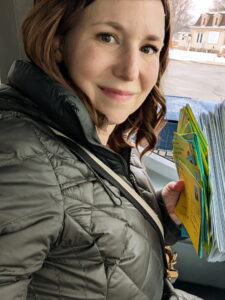 What happens when the stories we usually hear in the news suddenly hit home? For Jenny, our Willmar Area Program Manager, the immigration headlines became deeply personal, and heartbreakingly real.
Jenny, has worked alongside immigrants and refugees for years. But recently, she’s watched her friends, people who came to the U.S. legally through humanitarian programs, receive unexpected deportation orders. In a town like Willmar, that kind of news doesn’t stay quiet. It echoes across dinner tables, businesses, and prayer meetings.
These are real people with real stories.”
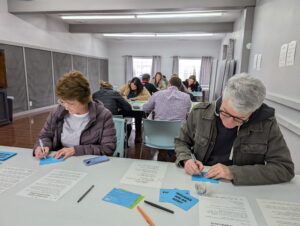 What drives Jenny to speak out? It’s the relationships. “What really matters is the individual stories of people,” she told us. “Because the individual stories of people have so impacted my life, I think sharing those stories is what’s going to matter in the long run.”
These aren’t anonymous figures in policy debates. These are parents, essential workers, homeowners, and neighbors. One of Jenny’s Haitian friends came to the U.S. legally through the CHNV program (a humanitarian parole program for Cubans, Haitians, Nicaraguans, and Venezuelans) and recently received a letter stating that she is now considered illegally present in the U.S. and has just 20 days to self-deport, or face arrest and possible deportation. “It’s a devastating blow to her, her family, and all of us who know her,” Jenny says.
As of April 15, a federal judge has temporarily blocked the government from ending the CHNV program. But for families already caught in the middle, the uncertainty remains.
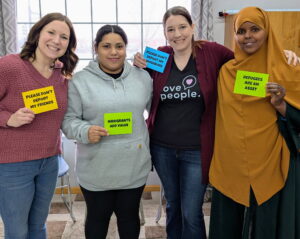 Others she knows have received similar notices. Many have U.S. citizen children, some of whom have never set foot in the countries to which their parents are being asked to return. This is impacting hundreds in this one small town and hundreds of thousands of people across the country.
It’s not safe to return.”
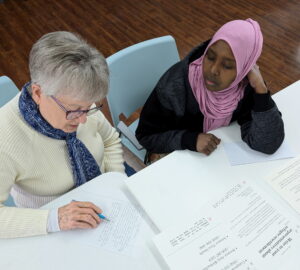
The truth behind these departures is sobering. Many of these individuals fled life-threatening situations. “Everyone I know,” Jenny says, “left because it was truly dangerous where they were living.” Some had threats on their lives, escaped abusive situations, and many walked for months to find safety. In some cases, like Haiti, the crisis is so severe that flights into the capital have been suspended. “Where are people supposed to go?” Jenny asks.
And the impact goes far beyond the individual. Some who came on TPS have lived in the country ten to fifteen years and own their homes and businesses. Many on humanitarian parole came with skills and trades that were a huge boost to industries that couldn’t find enough employees. In just one local nursing home, five skilled nurses received deportation orders. “It’s going to be devastating,” explains Jenny. “The massive numbers of people who are all supposed to be leaving at the same time – how do we recover from that as a community?”
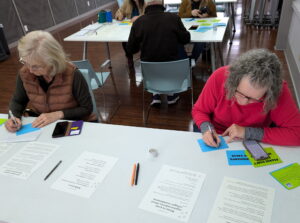 The economic and emotional loss to the town is incalculable. “It’s confusing,” she admits. All of these people came through legal programs. They have work permits. They’re contributing and paying taxes. “They aren’t living off social services,” she notes. “They aren’t doing the things we say we don’t want and are doing the things we say we do want. I’m really worried about the impact on our town.”
A Faith-Filled Lens
For Jenny, this crisis isn’t just personal, it’s spiritual. “When I read the Bible, I see God, and specifically Jesus, consistently drawing us to the vulnerable,” she shares. “Biblical justice looks like people actually having equal access to community, connection, and love.”
This deep conviction shapes how Jenny sees her neighbors and what she believes the Church is called to do. “God’s care doesn’t end at the borders of our countries. There are people on the vulnerable edges of our communities, and it’s often our immigrant neighbors.”
What’s more, she says, “When we lean in and get to know these people, they become our teachers. They show me the beauty of Christ’s work in their lives.”
Responding as a Community
In the face of fear and confusion, Jenny’s community hasn’t stayed silent. They’ve rallied with prayer meetings, phone calls, and letters to elected officials. “Our community has responded in unity,” she says.
And for those wondering what they can do, Jenny offers this encouragement:
- Start with one connection. “Get to know your neighbors. It starts with one connection and one story.” She suggests looking for natural spaces where you can cross paths and interact with people.
- Speak up. Advocacy matters. “Nothing changes unless we say something,” she says. “We vote, and then we tell our representatives what we want and don’t want. If we don’t, who is going to?”
- Have conversations in your circles. “Individual conversations really matter,” she reminds us. Conversations with people in your own communities open people up to new perspectives. “A lot of what I know now started with me knowing nothing,” she says, “And people were willing to have that conversation with me and give me some grace.”
Jenny’s story is a reminder that immigration isn’t just a national issue – it’s a neighborhood one. And when we know the people behind the policies, we begin to see more clearly what love, biblical justice, and community truly look like.
This blog was originally posted to the Women of Welcome community blog.